
Free Shipping on orders over $150

Free shipping

No returns or refunds
Returns or refunds are only accepted if the item arrives damaged, incorrect, or is lost during shipping.

Secure checkout
Scientific Overview
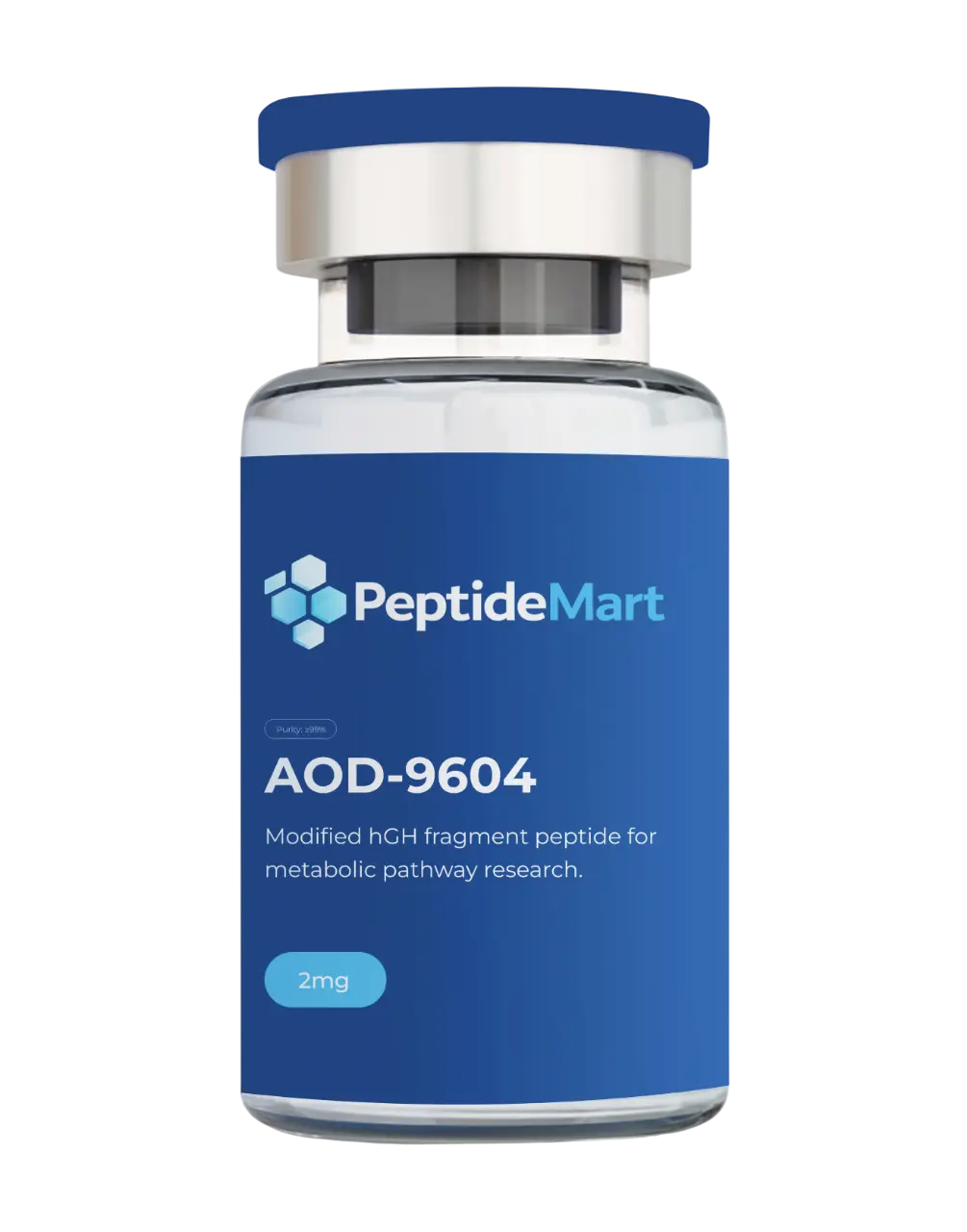
AOD-9604 is a modified fragment of the C-terminal region of human growth hormone (hGH), specifically amino acids 176-191, with the addition of a tyrosine residue at the N-terminus. It was developed to isolate the lipolytic activity of growth hormone from its growth-promoting effects. AOD-9604 received GRAS (Generally Recognized As Safe) designation from the US FDA in 2014.
Lipolytic Activity without Growth Effects
Preclinical studies observed that AOD-9604 interacts with lipolysis and lipogenesis pathways in adipose tissue without the diabetogenic, growth-promoting, or IGF-1-stimulating characteristics of full-length hGH. These observations were documented in both in vitro adipocyte assays and in vivo obese mouse models.
Phase 2 Clinical Evaluation
A randomized, double-blind, placebo-controlled phase 2b trial evaluated oral AOD-9604 in obese subjects over 24 weeks. The study assessed body weight change, waist circumference, and metabolic parameters. Results contributed to the compound's safety profile characterization.